
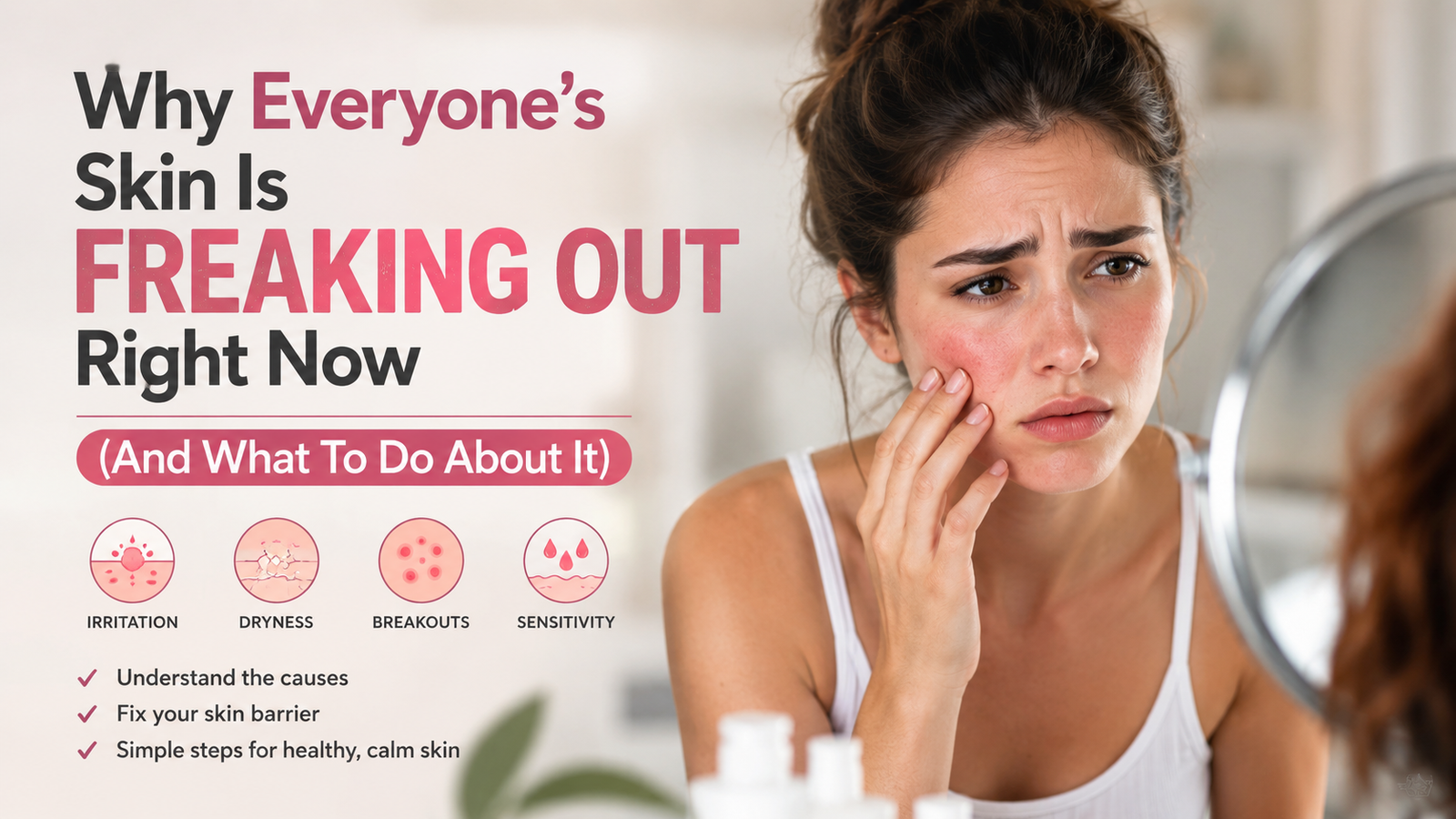
Why Everyone’s Skin Is Freaking Out Right Now (And What To Do About It)
Meta Description: Is your skin suddenly dry, irritated, breaking out, or extra sensitive? Discover why your skin may be freaking out right now and simple ways to restore a healthy skin barrier.
Focus Keyword: why is my skin freaking out
Why Is Everyone’s Skin Freaking Out Right Now?
If your skin suddenly feels dry, tight, itchy, red, bumpy, or unusually sensitive, you are definitely not alone. Many people experience periods when their skin seems to react to everything—from skincare products and weather changes to stress and lack of sleep.
The good news is that irritated skin does not always mean something is seriously wrong. Often, your skin barrier simply needs a little extra care and a break from an overly complicated routine.
Understanding why your skin is freaking out is the first step toward getting it back to a comfortable, healthy-looking state.
What Does “Skin Freaking Out” Actually Mean?
“Skin freaking out” is not a medical diagnosis. It is a simple way of describing sudden or noticeable changes in the skin.
Common signs include:
- Redness or flushing
- Dry, flaky patches
- Burning or stinging
- Small bumps
- Increased breakouts
- Excess oiliness
- Tight or uncomfortable skin
- Increased sensitivity to skincare products
- Rough or uneven texture
These symptoms can happen separately or at the same time. For example, your skin can be both oily and dehydrated, which can make it difficult to understand what is actually happening.
Your Skin Barrier Could Be the Problem
One of the biggest reasons skin suddenly becomes irritated is a weakened skin barrier.
Your skin barrier is the outer protective layer of your skin. It helps keep moisture inside while protecting your skin from environmental irritants.
When that barrier becomes compromised, your skin may lose water more easily and become more sensitive. Products that normally feel comfortable can suddenly sting or cause redness.
Several things can contribute to a stressed skin barrier, including excessive exfoliation, harsh cleansers, very hot water, dry weather, and using too many active skincare ingredients at once.
Too Many Skincare Products Can Backfire
The beauty industry is full of exciting products promising smoother, brighter, clearer-looking skin. However, using too many products can sometimes create the opposite result.
A routine containing exfoliating acids, retinoids, vitamin C, scrubs, acne treatments, masks, and multiple serums may be too much for your skin—especially when several active ingredients are introduced at the same time.
More skincare does not automatically mean better skincare.
If your skin suddenly becomes irritated, consider simplifying your routine instead of adding another product to fix the problem.
Weather Changes Can Affect Your Skin
Changes in temperature and humidity can have a major effect on how your skin feels.
Cold or dry air can make skin feel tight and flaky, while hot and humid conditions can increase sweating and oil production. Moving between outdoor weather and indoor heating or air conditioning can also challenge the skin’s ability to maintain moisture.
Seasonal transitions are therefore a common time for people to notice changes in their complexion.
If your skin becomes dry during colder months, a richer moisturizer may be helpful. During warmer weather, you may prefer lighter textures while still maintaining adequate hydration.
Stress Can Show Up on Your Skin
Your skin and overall well-being are closely connected.
Periods of stress can affect sleep, daily habits, and the way you care for your skin. Some people notice more breakouts during stressful periods, while others experience increased sensitivity or dryness.
Stress can also encourage habits that may affect the complexion, such as sleeping less, touching the face more frequently, or skipping parts of a regular skincare routine.
You do not need a perfect lifestyle to have healthy-looking skin, but getting enough rest, staying hydrated, eating a balanced diet, and finding ways to manage stress can support your overall well-being.
Is Your Skin Dehydrated or Dry?
These two terms are often used interchangeably, but they are not exactly the same.
Dry skin generally refers to a skin type that produces less oil. Dehydrated skin, on the other hand, lacks water.
That means even oily skin can become dehydrated.
Dehydrated skin may feel tight, look dull, or show more noticeable fine lines. A good moisturizer and gentle skincare routine can help support the skin’s moisture balance.
What To Do When Your Skin Is Freaking Out
When your skin is irritated, the best approach is often to simplify rather than intensify.
1. Simplify Your Routine
For a short period, consider returning to the basics:
Gentle cleanser + moisturizer + sunscreen
You can gradually reintroduce additional products once your skin feels comfortable again.
2. Use a Gentle Cleanser
Avoid aggressively scrubbing your face or using cleansers that leave your skin feeling extremely tight.
A gentle cleanser can remove dirt, makeup, and excess oil without unnecessarily stripping the skin.
3. Moisturize Regularly
A moisturizer helps support the skin barrier and reduce feelings of dryness and tightness.
Look for a formula that feels comfortable and does not cause irritation. Ingredients commonly found in barrier-supportive moisturizers include ceramides, glycerin, and other moisturizing ingredients.
4. Pause Aggressive Exfoliation
If your skin is burning, peeling, or unusually sensitive, take a break from harsh exfoliation.
Physical scrubs and frequent use of strong exfoliating acids may further irritate already-sensitive skin.
5. Be Careful With Active Ingredients
Retinoids, exfoliating acids, and other active ingredients can be useful when used appropriately, but introducing several powerful products simultaneously can make irritation more likely.
Once your skin settles, reintroduce products gradually rather than adding everything back at once.
6. Never Skip Sunscreen
Daily sun protection is an important part of any skincare routine.
A broad-spectrum sunscreen can help protect your skin from ultraviolet radiation. If your skin is sensitive, choose a sunscreen that feels comfortable and does not cause additional irritation.
What About Sudden Breakouts?
Breakouts can happen even when you normally have clear skin.
Hormonal changes, stress, environmental conditions, occlusive products, and changes in your routine can all contribute to blemishes.
Try to resist the temptation to attack every breakout with multiple drying treatments. Over-treating your skin can sometimes increase irritation and make the situation feel worse.
Instead, maintain a simple routine and avoid picking or squeezing blemishes.
Should You Stop Everything?
Not necessarily.
If a product has been working well for you for a long time, there may be no reason to remove it automatically. However, if your skin is suddenly reacting, simplifying your routine can make it easier to identify possible triggers.
It can also help to introduce new products one at a time. That way, if irritation develops, you have a better idea of what may have caused it.
The “Skin Cycling” Approach
Some skincare enthusiasts use a method known as skin cycling, which involves alternating active ingredients with recovery-focused nights.
The concept emphasizes giving your skin time to recover instead of using strong active ingredients every night.
However, there is no universal skincare routine that works for everyone. People with sensitive skin may need a particularly gentle approach, while others may tolerate active ingredients more frequently.
The goal should always be comfortable, healthy-looking skin rather than using as many products as possible.
When Should You See a Dermatologist?
Most minor skincare irritation can improve with gentle care, but persistent or severe symptoms deserve professional attention.
Consider speaking with a dermatologist if you experience:
- Persistent or worsening redness
- Significant swelling
- Severe itching or pain
- Repeated rashes
- Crusting or oozing
- Sudden widespread skin changes
- Symptoms that do not improve with basic skincare
- A reaction that occurs after using a new product
A dermatologist can help determine whether your symptoms are related to irritation, allergy, acne, eczema, rosacea, or another skin condition.
A Simple Skin Reset Routine
If your complexion feels overwhelmed, try keeping your routine simple.
Morning:
- Gentle cleansing, if needed
- Moisturizer
- Broad-spectrum sunscreen
Evening:
- Gentle cleanser
- Moisturizer
Once your skin feels calm and comfortable, you can slowly add other products back into your routine.
Remember that everyone’s skin is different. What works beautifully for one person may cause irritation for another.
The Bottom Line
If your skin is suddenly dry, irritated, breaking out, red, or unusually sensitive, the solution may not be another trendy skincare product.
Sometimes your skin simply needs less.
A simple routine, gentle cleansing, regular moisturizing, daily sun protection, adequate rest, and patience can go a long way toward supporting your skin barrier.
Most importantly, pay attention to what your skin is telling you. If something burns, stings, or consistently causes irritation, stop and reassess rather than pushing through it.
Healthy-looking skin is not about having the longest skincare routine. It is about finding a routine your skin can comfortably tolerate and maintaining it consistently.
SEO Keywords
why is my skin freaking out, skin irritation, irritated skin, damaged skin barrier, sensitive skin, skincare routine, skin barrier repair, dry skin, sudden breakouts, skincare tips, healthy skin, skin reset routine
FAQ
Why is my skin suddenly freaking out?
Sudden skin irritation can be associated with changes in weather, stress, skincare products, over-exfoliation, dehydration, or a disrupted skin barrier.
How can I calm irritated skin?
Simplify your routine, use gentle skincare products, moisturize regularly, avoid aggressive exfoliation, and protect your skin from the sun.
Can too much skincare damage the skin barrier?
Using too many potentially irritating products or over-exfoliating can contribute to irritation and compromise the skin barrier.
How long does irritated skin take to calm down?
It depends on the cause and severity. Mild irritation may improve after removing the trigger and simplifying your routine, while persistent symptoms should be evaluated by a dermatologist.
Should I stop using all active skincare products?
If your skin is irritated, temporarily reducing potentially irritating actives may be helpful. Once your skin is comfortable again, products can often be reintroduced gradually.